myCoke eCommerce & Service Platform: End-to-End Experience Transformation
Designing seamless ecommerce and service at scale (2025-Present)
Overview
As Director of B2B Product Design for Coca-Cola, I led UX across the myCoke eCommerce and Service ecosystem — a complex enterprise platform serving retailers, bottlers, food-service operators, and field technicians.
I owned the end-to-end design lifecycle across discovery, design, and validation, leading a blended team of 3 UX designers and 1 researcher. My role balanced strategic design leadership with hands-on execution for critical experiences, ensuring clarity, consistency, and measurable customer and business outcomes across the platform.
The Challenge
Despite strong brand recognition, myCoke faced deeper experience and operational challenges:
- Fragmented experiences across multiple legacy portals
- Heavy reliance on manual workflows (email + phone support)
- Low adoption and inconsistent usage across core journeys
- Limited customer insight loops to guide prioritization
- Slow iteration cycles across complex enterprise workflows
The organization needed:
- A unified UX vision across product lines
- A scalable design operating model
- Customer-driven prioritization
- Faster concept-to-validation cycles
My Role
Strategy & Leadership
- Owned end-to-end UX across eCommerce, Service, and Account experiences
- Led and mentored UX team while setting experience standards and direction
- Partnered with Product and Technology leadership using importance–difficulty prioritization
- Defined future-state experience strategy across ordering, service, invoicing, and account management
Execution & Craft
- Stayed hands-on designing early structural wireframes for high-impact experiences
- Introduced structured Discovery → Design → Validation operating model
- Modernized concepting and validation using AI-enabled prototyping workflows
Organizational Influence
- Facilitated large cross-functional discovery workshops across Product, Engineering, Service Ops, Finance, and CX
- Increased organizational confidence in design-led decision making
- Elevated design maturity across teams and partners
Business & Experience Impact
Customer & Operational Outcomes
- 40K+ annual manual support requests eliminated
- 80% direct technician routing immediately after case creation
- 43% faster credit submissions vs assisted channels
- +7pt Quality Maintenance completion vs legacy process
Platform Transformation
- 4 portals → 1 unified platform
- Legacy systems retired
- Scalable Design System v2 implemented
Organizational Impact
- Standardized Discovery → Design → Validation model
- Improved cross-functional prioritization around customer value
- Increased design maturity across product organization
- Accelerated delivery and stakeholder confidence
Approach
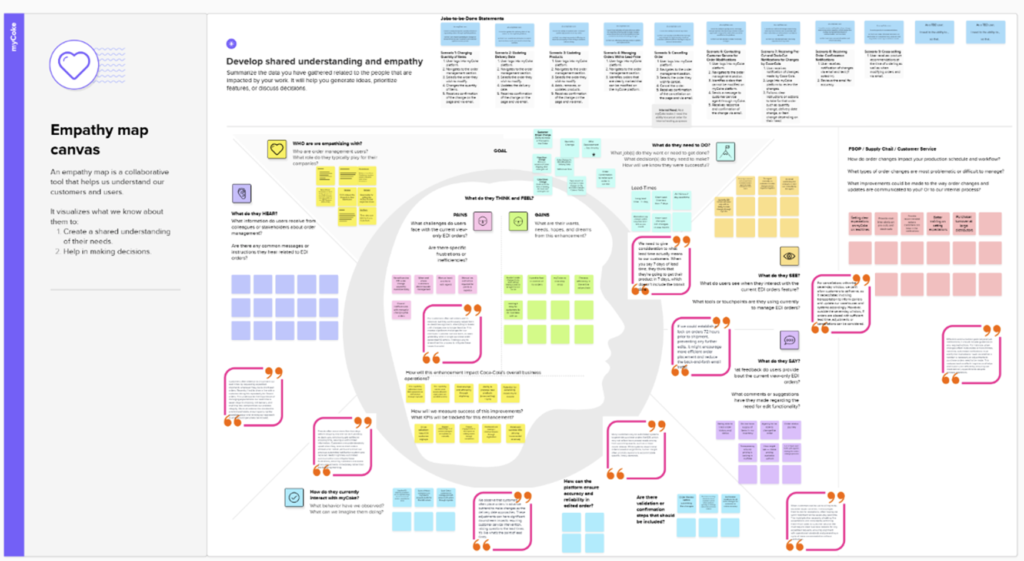
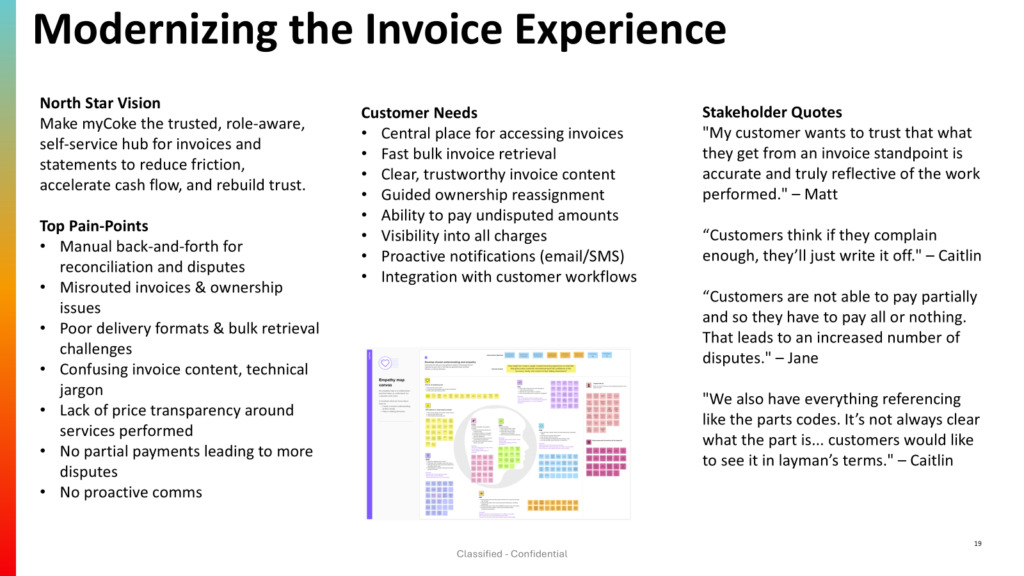
1. Enterprise UX Discovery at Scale
Led large discovery workshops (20+ stakeholders) focused on:
- Order Management
- Invoice Management
- Reimbursement & Scorecards
Methods included:
- Customer empathy mapping
- Jobs-To-Be-Done framing
- Opportunity mapping and rapid concept generation
Result:
Ambiguous problem spaces converted into prioritized, customer-grounded opportunity areas.
2. Instituting a Scalable UX Design Operating Model
To bring alignment and predictability, I established a structured process used across teams.
Discovery
- Customer and internal interviews
- Focused discussions on customer problems and outcomes
- Journey mapping
- Pain‑point analysis
- Importance–difficulty prioritization
Design
- IA and workflow redesign
- Rapid AI prototyping for faster iteration
- Team‑produced low-and-high fidelity mockups
- My own contribution: early wireframes and structural UX thinking
Testing
- User testing
- Feedback synthesis and design refinement
This framework reduced churn, improved cross‑team alignment, and accelerated delivery.
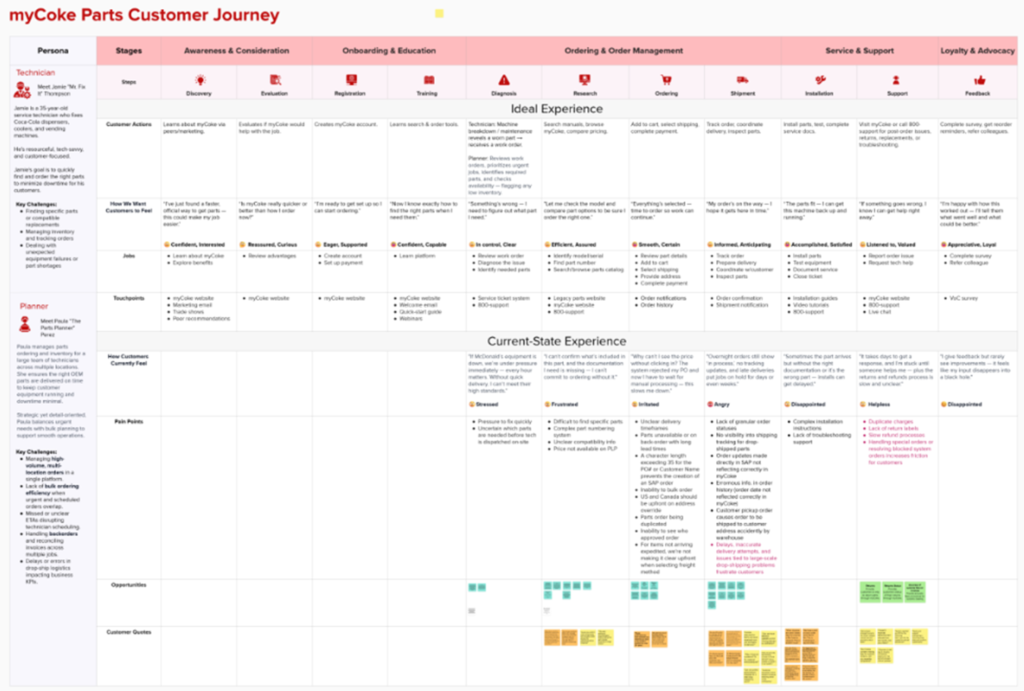
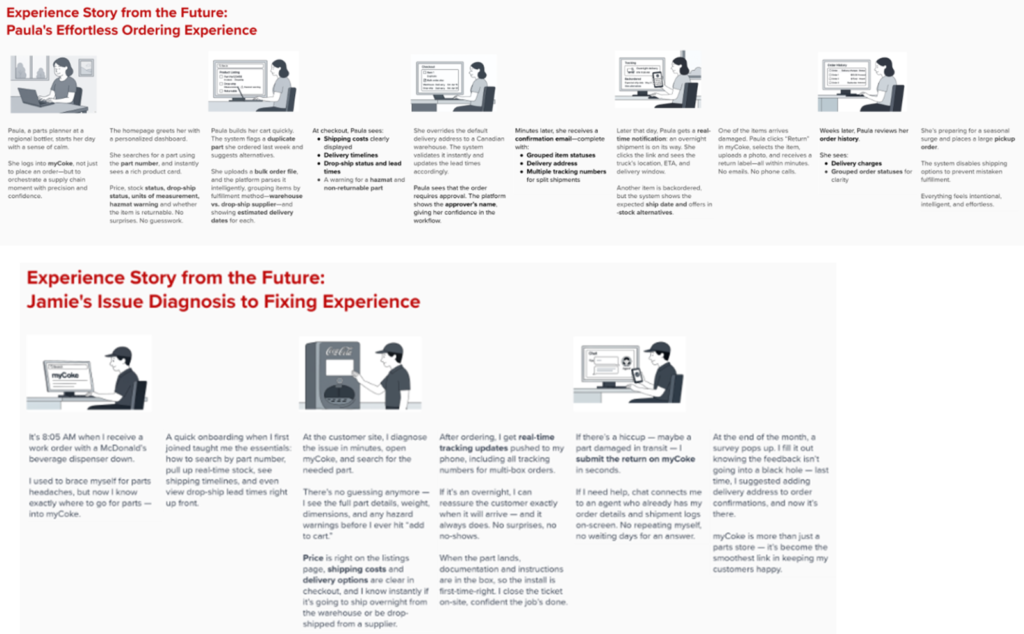
3. Journey Transformation — Parts Experience
I drove a full discovery program for the Parts experience, mapping the entire customer journey across:
- Problem identification
- Part search and compatibility
- Ordering flows
- After‑purchase service interactions
Using the importance–difficulty framework, we identified priority opportunities and developed a future‑state vision for a modernized, intuitive parts experience. I personally produced early wireframes and concept prototypes to help stakeholders visualize and align on the target experience.
4. Accelerating Validation with AI‑Driven Prototyping
To speed experimentation and testing, I integrated cutting‑edge AI design tools, including:
- Figma Make
- Lovable
- Claude
- Stitch
- Nano Banana Pro
Results
- Reduced early concepting from 2–3 weeks to 2–5 days
- Improved stakeholder understanding through instantly testable prototypes
- Raised the velocity and sophistication of UX deliverables
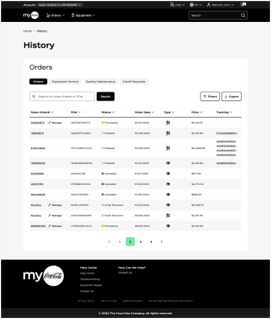
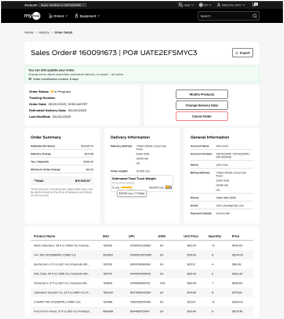
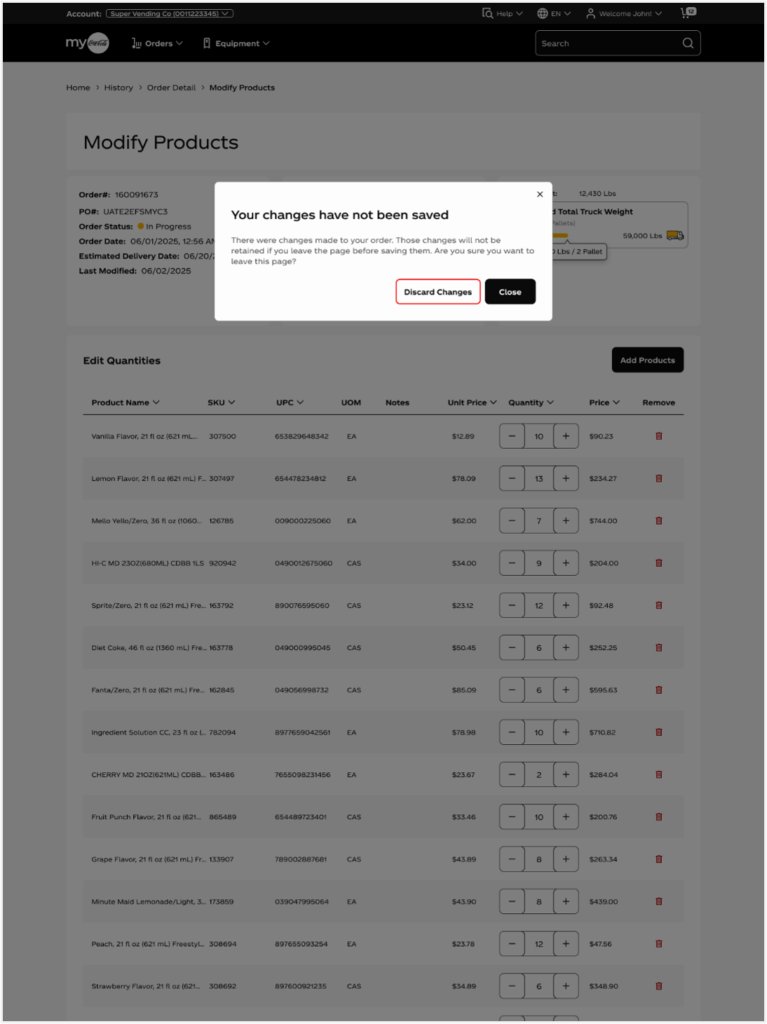
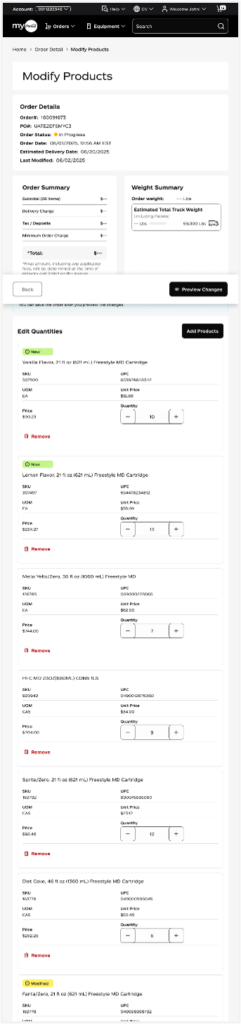
5. Delivering a Cohesive, Modern B2B Experience
Supported modernization on Salesforce Lightning and led design system evolution.
Scope included:
- Ordering and tracking
- Service requests
- Invoicing and reimbursements
- Account management
- Self-service help
All experiences prioritized clarity, predictability, and low cognitive load.
What This Demonstrates
- Enterprise B2B experience transformation leadership
- Platform modernization and design system scaling
- Cross-functional influence at organizational level
- Measurable business and operational impact
- Forward-leaning adoption of AI in design workflows
Connection to Voice of the Customer Program
To sustain customer-centered decision making long-term, I also built the myCoke Voice of the Customer program — creating a continuous insight engine that directly informed roadmap and platform decisions.
Sample Outputs